Custom objects, chained associations, calculated rollup properties, multi-system data models, and executive dashboards — built on architecture that scales with you. We design ERDs, document every relationship, and deliver models your team can actually maintain.
Custom objects, chained parent-child-grandchild associations, calculated rollup properties, multi-system identifier strategies, ERD diagrams, import pipelines, and data models that map to your real business entities — not just Contacts, Companies, and Deals.
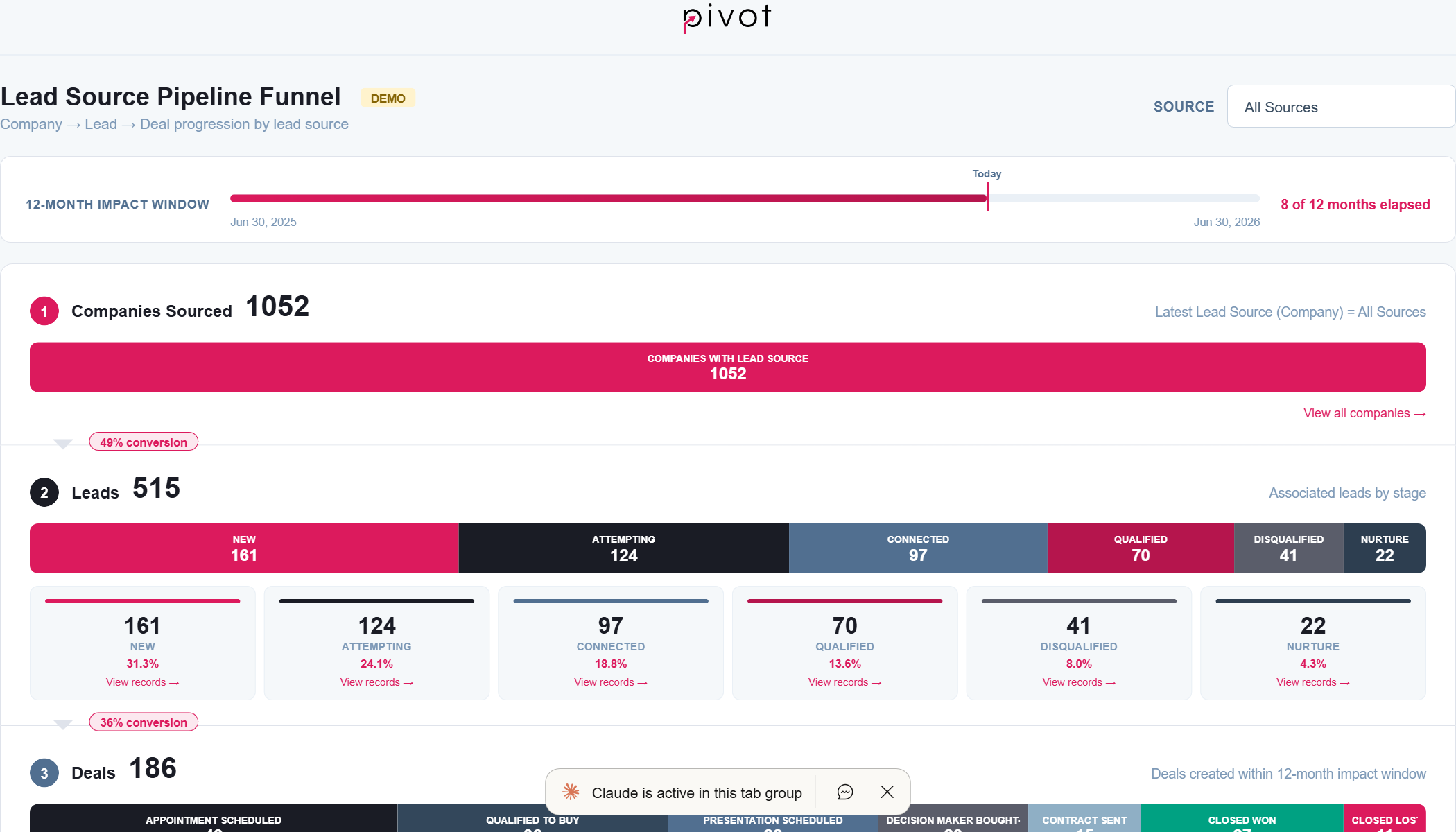
Deal split revenue calculators, forecasting configuration, multi-touch attribution, executive dashboards, coverage and penetration reporting, recurring revenue analytics, and whitespace identification for upsell targeting.
Design custom objects that represent your real business entities — loans, plants, installers, assets, warranties, sites. Define properties, pipelines, and association rules from scratch.
Parent-child-grandchild relationships with exclusive constraints. Company → Site → Plant. Contact → Deal → Loan. Multi-level hierarchies with labeled associations and cardinality rules.
Automatically aggregate child data to parent records. SUM user counts from Plants to Sites to Companies. COUNT associated records. Calculate coverage percentages. No manual entry at the parent level.
When multiple external systems write to HubSpot, we design unique identifier strategies, cross-system match keys, and conflict resolution rules so data stays clean across every source.
Node.js functions inside HubSpot workflows that calculate deal splits, resolve owner IDs, process associations, and write structured results back to CRM properties.
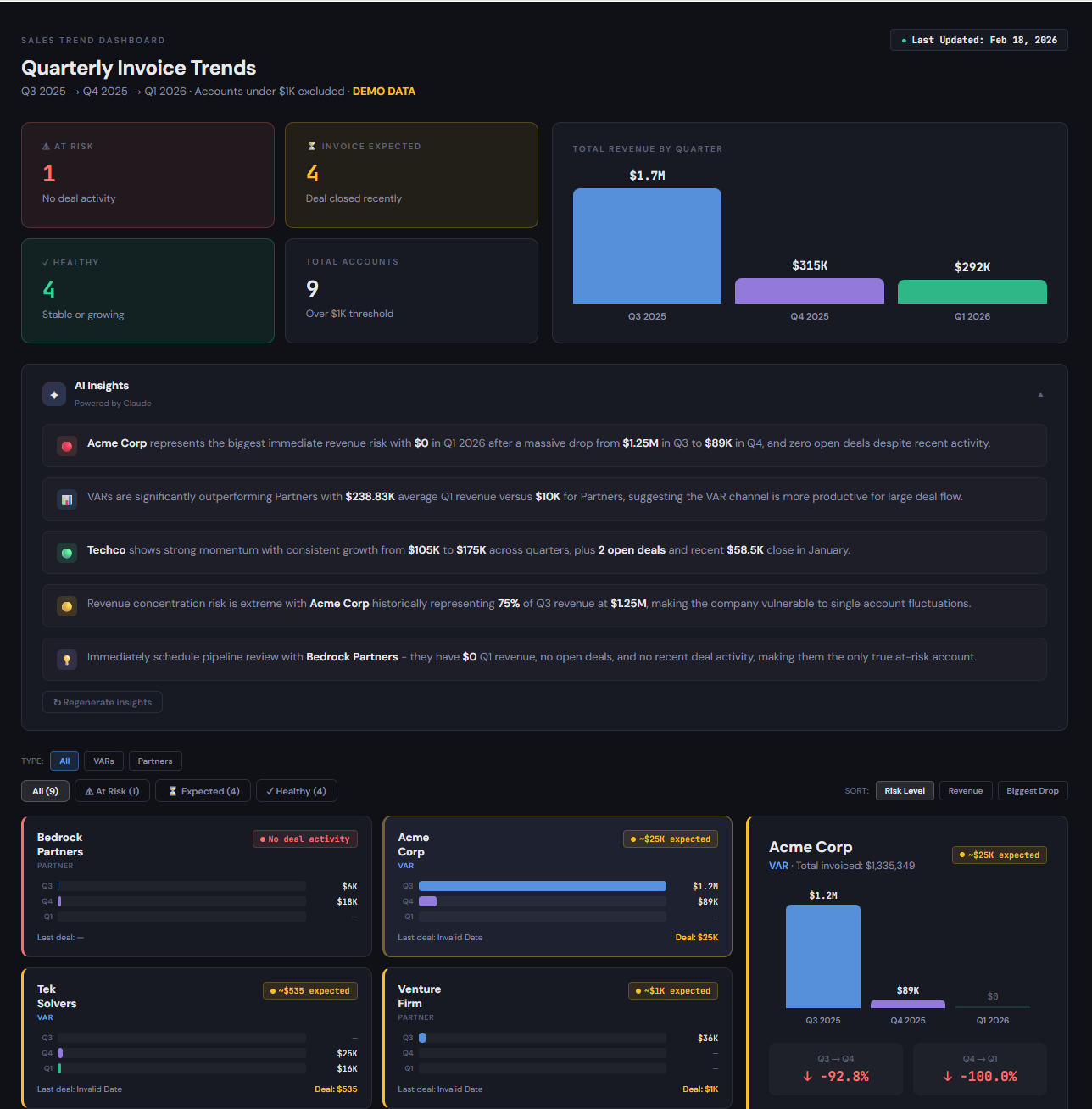
Dashboards that actually mean something because the underlying data model is right. Account coverage, pipeline by location, prospect plant lists, user growth trends, and renewal timelines.
Visual ERD with every object, association, cardinality rule, primary keys, foreign keys, and match keys. SVG diagrams you can embed in internal documentation.
Full property listings per object — data types, source systems, required fields, default values, and which system owns each field when multiple sources write to HubSpot.
How each system finds and matches the correct HubSpot records. Match keys, ID storage requirements, search-vs-direct-lookup decisions, and fallback logic documented.
Deal stages, custom object pipelines, and lifecycle stage transitions mapped to your actual business flow — with which system triggers each transition.
Every relationship documented: direction, multiplicity (1:1, 1:N, N:N), constraints, association labels, and business purpose. Quick-reference "can have many" rules.
Import procedures, deduplication strategy, data quality automation, conflict resolution between sources, and ongoing maintenance guidelines.
Complete data architecture for a lending company with three external systems (loan origination, credit decisioning, loan servicing) all writing to HubSpot simultaneously.
Custom object architecture for a B2B software company that needed to track product deployment and upsell opportunities at the individual plant level across customer accounts.
Complete custom data model for a solar energy storage company with complex installer, plant, asset, and alert relationships.
Per-rep pipeline visibility for a company with complex deal splits and multiple sales owners per opportunity.
Migrating from a contact-based lead pipeline to a company-level lead pipeline for cleaner B2B sales operations.
SaaS-specific reporting configuration including MRR/ARR tracking, churn analysis, expansion revenue, and customer health scoring.
Custom coded action that identifies duplicate companies sharing the same base domain across an entire HubSpot portal.
Data architecture supporting separate US/Canada and European market segmentation with region-specific lead routing and data quality standards.
Custom object design, property definitions, association configuration, pipeline setup, and documentation. Includes ERD and data model spec.
Custom executive dashboards, deal forecasting configuration, multi-touch attribution, and coverage/penetration reporting.
Custom coded workflow actions for deal splits, revenue calculators, data quality audits, and complex business logic.
Anyone can build a chart. The hard part is designing the underlying data architecture so the chart actually means something — custom objects with the right associations, rollup properties that aggregate correctly, and identifier strategies that keep data clean across multiple source systems. That's where we live.
Architecture I: Data Models & APIs certification. Solutions Architecture Foundations. Data Integrations certification. We have the HubSpot certifications that prove hands-on expertise with data architecture.
We use custom objects, calculated properties, Data Hub, and Associations v4 in our own HubSpot instance daily. When we design your data model, it's based on production experience.
We've designed data models fed by 3+ external systems simultaneously. We know how to handle overlapping fields, source-of-truth conflicts, and cross-system match keys.